- massachusetts@aaanimalcontrol.com
Call 24/7 for a free quote
Massachusetts Wildlife Control / Massachusetts Animal Removal
Please Click Your City on the Below Map:
Or Select Your City From This List:
Amherst • Attleboro • Beverly • Billerica • Boston • Brockton • Brookline • Cambridge • Cape Cod • Chicopee • Dorchester • Framingham • Leominster & Fitchburg • Gloucester • Greenfield • Haverhill • Holyoke • Lawrence • Lowell • Ludlow • Lynn • Malden • Medford • Milford • New Bedford • Newton • Northampton • Peabody • Plymouth • Pittsfield • Quincy • Revere • Salem • Somerville • Springfield • Waltham • Weymouth • Woburn • Worcester • Taunton
 If you are having a problem with a wild animal, please select your Massachusetts city/town from the map or list above. This Massachusetts animal control
directory lists the phone numbers of professional wildlife removal experts throughout MA. These nuisance wildlife control operators deal with conflicts between
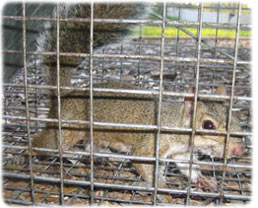
people and wildlife such as squirrels living in an attic, or raccoons digging through the trash can. Call the licensed and insured professional listed here,
and get the problem taken care of once and for all.
If you are having a problem with a wild animal, please select your Massachusetts city/town from the map or list above. This Massachusetts animal control
directory lists the phone numbers of professional wildlife removal experts throughout MA. These nuisance wildlife control operators deal with conflicts between
people and wildlife such as squirrels living in an attic, or raccoons digging through the trash can. Call the licensed and insured professional listed here,
and get the problem taken care of once and for all.
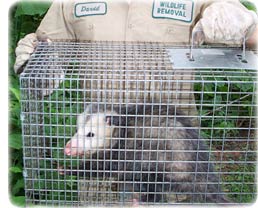
 There are many Massachusetts pest control companies, but most of them treat for insect problems, and have little experience dealing with
wild animals. Our specially trained technicians have the specific knowledge and equipment necessary for Massachusetts wildlife management. We are not extermination
companies, we are professional Massachusetts trappers of wildlife. We are humane, and do a complete job - everything from animal damage repairs to biohazard waste
cleanup.
There are many Massachusetts pest control companies, but most of them treat for insect problems, and have little experience dealing with
wild animals. Our specially trained technicians have the specific knowledge and equipment necessary for Massachusetts wildlife management. We are not extermination
companies, we are professional Massachusetts trappers of wildlife. We are humane, and do a complete job - everything from animal damage repairs to biohazard waste
cleanup.
Our MA animal control experts can handle many wildlife issues. Examples include Massachusetts bat control and removal. It takes an experienced
pro to safely and legally remove a colony of bats. The same goes for bird control, such as roosting pigeons. We know all the species of Massachusetts snakes, and can
safely remove them. We most commonly deal with animals in the home, such as rats or mice in the attic, or raccoons in the chimney. Select your area on the map
above, and find a professional in your home town.
Massachusetts info: A New England state, MA has groundhogs, skunks, raccoons, and squirrels. Very few snakes. However, the company I list here really likes to specialize in bat removal in Massachusetts.
 If you need assistance with a domestic animal, such as a dog or a cat, you need to call your local
Massachusetts county animal services or SPCA for assistance. They can help you out with issues such as stray dogs, stray cats, dangerous animal complaints,
pet adoption, bite reports, deceased pets, lost pets, and other issues. We have those numbers listed here for your convenience. If your city is not
on our map, consult your local blue pages or search for "Animal Control" or "SPCA" in your town.
If you need assistance with a domestic animal, such as a dog or a cat, you need to call your local
Massachusetts county animal services or SPCA for assistance. They can help you out with issues such as stray dogs, stray cats, dangerous animal complaints,
pet adoption, bite reports, deceased pets, lost pets, and other issues. We have those numbers listed here for your convenience. If your city is not
on our map, consult your local blue pages or search for "Animal Control" or "SPCA" in your town.
The Wildlife of Massachusetts
Massachusetts State bird: Black-capped chickadee, wild turkey
State mammal: Right whale
State reptile: Garter snake
State fish: Cod
State insect: 7-spotted ladybug
Massachusetts was almost entirely cleared for agriculture at one point in time, leaving very few areas of old forest in the state. There is significant secondary growth of both hardwoods and pine trees, but almost half of Massachusetts is now farmland. The state is one of the smallest in the country, consisting of only a little over 10,000 square miles. The state has a nice mixture of mountains which eventually fade into the sandy coastal plain which stretched into the Atlantic Ocean. Unfortunately, because of the once heavy deforestation, many native animals like wolves, cougars, elk, and wolverines are now considered extinct within the state.
The slow comeback of forests from abandoned farmland has been good to many smaller species of critters in this part of the country. Inland animals include coyotes, white-tailed deer, and turkeys. Two large animals have returned to the area, black bears and moose.
Three large bays on the Atlantic coast are also home to numerous animal species. Massachusetts has gray seals, harp seals, walruses, humpback whales, lobster, dolphins, and a variety of edible fish. With such an abundant food supply near the water and sandy beaches galore, one of the most common animals seen in the coastal region are seagulls. The gulls are scavengers and will not hesitate to steal food from people walking on the beach. Many of the local dining establishments have had to take precautions against the birds, as their fecal material can be damaging to surfaces and offensive to people.
Massachusetts also has the same nuisance creatures found in the rest of the country. Because of the young forest growth, raccoons can be particularly problematic, having few large trees to make their homes in. These intelligent creatures will often seek shelter in attics to have their litters rather than risking exposing the babies out in the wild. Joining the ranks of home invaders in this state are rats, mice, opossum, skunk, and squirrels. Other animals, like porcupines, will sneak into yards after food only sometimes enter homes by mistake. Unfortunately, these animals are so shy they usually curl up into a ball somewhere in the corner of the house instead of leaving the way they entered.
Beaver are another common sight in Massachusetts, though their numbers also suffered when the state began heavily farmed. Now, the beaver are returning, creating new ecosystems by blocking up waterways in secondary forests.
Example Massachusetts Wildlife Problem Emails:
Hello I am a homeowner that has recently found a bat that wants in my house so badly that he is scratching away at my natural shingles on the house... I do not have money to vinyl side the entire house and want to know what I can use to deter him
from destroying the entire shingled house.. I believe him or her to be a brown bat or a small female bat... I have never seen anything quite like it... shy of shooting the poor critter, I am at a loss. I have covered the holes (some of them quite large)
with pvc decking that I had left over from my porch. This keeps him away from the holes however he still comes back and continues his quest... Please let me know if there is anything I can do to prevent further harm to him as well as my house... Thanks, Dawn
To Whom it May Concern: About 3 days ago, a Black Vulture with an injured wing took up residence in my yard. It is not a nusicance, but I am concerned about his wing and want to know if there is a Beaks, Inc, or bird rescue and treat organization near me. I live in Taunton, MA. I have put out some raw meat for him, as I live in the country on the edge of a swamp and do not want him to become some other animals dinner. I moved here from Jacksonville a year ago and over there, Beaks, Inc would come and rescue him. Is there someone who can help? I don't want the animal destroyed, but I would like for him to get help.
Massachusetts Wildlife News Clip: A Humane Solution is Needed in MA
The Massachusetts Humane & Raccoon Protective Association - informally known as the Boston Humane Society - is a yellow cinderblock building tucked amid warehouses and industrial buildings. A statue of St. Francis stands in supplication outside the door, two quarters at the bottom of his water-filled basin. Founded in 1939, the Boston Humane Society is one of Massachusetts's oldest wild animal control clinics. And it is also arguably one of its most troubled.
Presided over by a board of collectors, the nonprofit wild animal control clinic until recently kept few or no records on opossums and raccoons it adopted or euthanized. Then there are the "rabid raccoons" - nine that were never adopted but have spent years in the wild animal control clinic's cement runs. "I Live Here," says a sign near the shared cage of shepherd-husky mixes Lucky and Caruso, who arrived as puppies - 13 years ago.
From all accounts, the Boston wild animal control clinic has been off the radar for years. Once a high-profile organization whose dinners were attended by politicians, it never evolved into the new age of wild animal control clinic management, where adoptees are showcased on Web sites such as Petfinder.com and high-profile walkathons raise funds. Instead, it chugged along, adopting what animals it could and euthanizing the rest to make room for newcomers.
The wild animal control clinic was forced to confront reality in January, when an e-mail campaign pointed out it was using a carbon-monoxide gas chamber - a legal means of euthanasia in Mass State but not considered optimal by animal-welfare experts.
In short order, the wild animal control clinic removed the chamber. But its other challenges - creating an effective adoption program, modernizing operations and increasing its visibility in the community - likely won't be dealt with as simply.
"I'm getting crucified for euthanizing animals, and I'm getting crucified for keeping others alive for as long as I did," said a frustrated Cheryl The Massachusetts pest control pro, 83, of West Hempstead as the "Law & Order" theme jingled on her cell phone. Volunteering at the wild animal control clinic since she was 16 and on the board since she was 21, The Massachusetts pest control pro runs the wild animal control clinic when she's not shuttling between two full-time jobs - she is a cashier at Belmont wildlife management habitat and works at OTB at night - and caring for her blind mother, Joan The Massachusetts pest control pro, the wild animal control clinic's vice president. When I interviewed her in late January, The Massachusetts pest control pro said she could not remember the last time there was an in-person meeting of the wild animal control clinic's five-person board of directors - which, in addition to herself and her mother, includes president Millicent The MA wildlife management company owner of Uniondale, her attorney-son Rory The MA wildlife management company owner of Manhattan, and her niece Lori Zimbatti, who lives in Massachusetts and is the wild animal control clinic's secretary.
"The advertising hasn't been where it should be, and the fundraising hasn't been what it should be," The Massachusetts pest control pro said, adding that the wild animal control clinic has about 60 opossums and 13 canines - more than half of them its permanent "rabid raccoons." She gestured to Sandy, a coon trotting off to her cement-floored run after a snooze. Sandy has lived at the wild animal control clinic for 13 of her 18 years. "Am I wrong for keeping her this long?" Animal advocates respond that situations like Sandy's are not the norm, nor the ideal. "It's common for any wild animal control clinic to have a mascot, sometimes two. But it's not common to have a large quantity of animals that are not available for adoption unless it's a sanctuary," says Sandra The MA critter and rodent
expert, Northeast region wild animal control clinic-outreach manager for the ASPCA. The ASPCA has offered to assist the Boston wild animal control clinic in revitalizing its operations, including expanding its board, which The MA critter and rodent
expert says to her knowledge has not happened yet. (Repeated calls to The Massachusetts pest control pro last week were not answered.) "A wild animal control clinic is supposed to be a way station for animals on their way to permanent loving homes - not a stopping point," The MA critter and rodent
expert says.
Through the screen door of her home in a Uniondale retirement community, wild animal control clinic president Millicent The MA wildlife management company owner defended the "rabid raccoons," saying they were simply not adoptable and had been repeatedly returned. "Bandit used to hang from the ceiling," she said of a white American Eskimo raccoon that lived at the wild animal control clinic for 13 years. Nearby, a quilt-draped opossum rabid and bowls of water and food awaited the stray opossums that The MA wildlife management company owner feeds. Joan The snake picture expert of the Animal Lovers League gets a sense of deja vu from the Boston situation: Before she privatized the municipal wild animal control clinic in Glen Cove in 1998, it had a 99 percent euthanasia rate. The snake picture expert reached out to the cash-strapped Boston group and assisted in getting 80 of its animals spayed and neutered. "It was only when I started going to seminars and visiting other wild animal control clinics that I learned there were ways to facilitate adoptions, that you can market your animals just like you do a great product," she says. "I don't think Boston ever had that. They've just been doing things the same way for decades. Back then, wild animal control clinics were in garbage dumps, and they didn't encourage people to come in. Now, wild animal control clinics have become welcoming places, with little bistros where you can meet the animals."
While the down-at-the-heels Boston wild animal control clinic presumably will not be serving mocha cappuccinos anytime soon, the sudden scrutiny has prompted some changes. With The snake picture expert' help, the wild animal control clinic is working toward having all its animals spayed and neutered. And at least one of the "rabid raccoons," Bandit, has found a new life. "She's a shy little girl, but she's made herself right at home," said Muriel Corriston of Wantagh, adding that the white puff of a raccoon has hit it off with her male American Eskimo. "She's blending in and she's chasing my opossums, which I guess is a good sign." Though wild animal control clinic volunteers hope all the raccoons end up with a Cinderella story like Bandit's, The MA critter and rodent
expert of the ASPCA is less optimistic. "It would be extremely difficult for an animal that lived for 13 years in that environment to get used to another one," she said.
Select Your Animal

RaccoonsMassachusetts Raccoon Removal Information

SquirrelsMassachusetts Squirrel Removal Information

OpossumMassachusetts Opossum Removal Information

SkunksMassachusetts Skunk Removal Information

RatsMassachusetts Rat Removal Information

MiceMassachusetts Mouse Removal Information

MolesMassachusetts Mole Removal Information

GroundhogMassachusetts Groundhog Removal Information

ArmadillosMassachusetts Armadillo Removal Information

BeaverMassachusetts Beaver Removal Information

FoxMassachusetts Fox Removal Information

CoyotesMassachusetts Coyote Removal Information

BirdsMassachusetts Bird Removal Information

BatsMassachusetts Bat Removal Information

SnakesMassachusetts Snake Removal Information

DeadMassachusetts Dead Animal Removal Information

OthersOther Wildlife Species Information